

Contact Details:
+86 17852488518

Do you know what keeps me up at night? It's not competitors—it's watching them spend hundreds of thousands, even millions of dollars, on steel drum production equipment that's completely unsuitable for their needs.
I've been in this industry for far too long; I've seen too many tragedies like this. A factory owner excitedly orders a drum production line, signs the contract, and six months later discovers the machine's speed is completely mismatched with the actual order volume. Even worse, someone bought a 55-gallon (210-liter) drum production line, only to find it couldn't process the steel plate thickness required by the customer.
The global steel drum market was valued at $12.6 billion in 2024 and is projected to reach $16.7 billion by 2030, with a CAGR of 4.8%. The 55-gallon (210-liter) drum alone accounts for 55% of the market share, or approximately $6.93 billion. This means a massive volume of drums, and countless companies scratching their heads—which Steel Drum Production Line should they choose?
H2: Don't rush to look at the specifications—what kind of drums do you actually need?
Before you stare at any equipment parameter sheet, first clarify this: what kind of steel drums do you actually want to produce?
Every time I consult with a client, the first question is always: the steel drum production equipment you choose depends entirely on the following factors:
Material type. Are you using cold-rolled steel sheet (typically 0.8~1.2mm thick)? Or do you need stainless steel drum production equipment to meet food-grade requirements? Or are you making chemical drums, requiring galvanized drum production equipment for corrosion protection? Different materials perform drastically differently in forming, welding, and edge rolling.
Drum design. Open-top drum production equipment and closed-top drum production equipment are completely different. Open-top drums (also called open-top steel drums) have removable lids and are suitable for solid or semi-solid materials. Closed-top drums have a fixed top and only two small inlets, standard for liquids. Some production lines can handle both, but not all can.
Production capacity. Are you making 30-liter small drums or 220-liter large drums? Standard production lines typically cover 100-220 liters. If you're producing special sizes, the equipment must be compatible.
Industry Requirements: The standards for sealing and inner coating in chemical drum production equipment are completely different from those for food drum production equipment. Food-grade drums require hygienic materials and a clean production environment.
Settling these fundamental issues first will save you 90% of the trouble later.
H2: This is the most interesting part. Buyers' first question is usually, "How fast?", but this is precisely the question where they are most likely to make mistakes.
I divide the market speeds into three tiers:
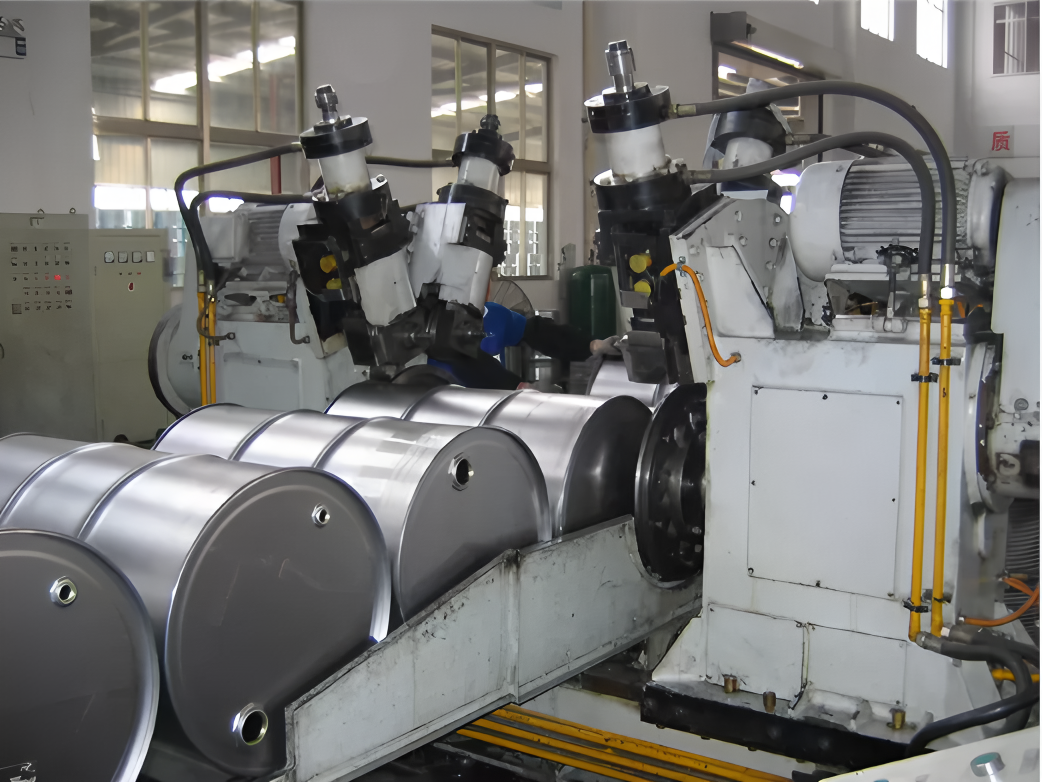
Low-speed line (1-2 drums per minute): Entry-level. Simple structure, affordable price, and easy maintenance. The factory occupies approximately 1000 square meters, requires about 15 operators, and has an annual output of about 100,000 drums. Suitable for startups or small-scale production. Low initial investment and low maintenance costs.
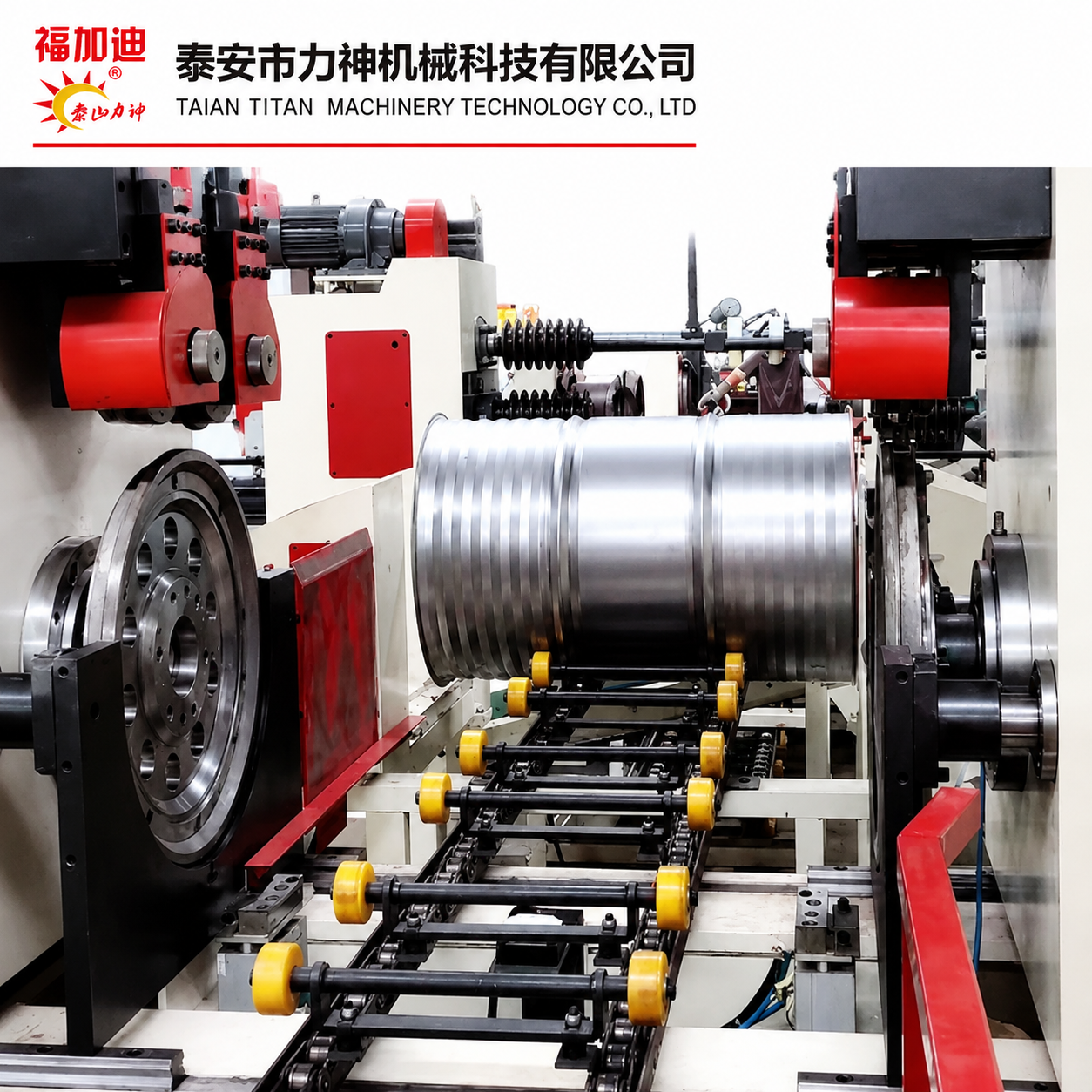
Medium-speed line (5-6 drums per minute): This is the "golden choice" for most medium-sized manufacturers. The factory covers approximately 2,000 square meters, requires only about 10 operators, yet boasts an annual output exceeding 300,000 units. This type of line is based on a mature domestic machine design, offering reliability and high cost-effectiveness.
High-speed line (7-8 drums per minute): The real "big guys." The factory covers approximately 5,000 square meters, requires only about 8 operators, and has an annual output exceeding 500,000 units. Most importantly, its performance rivals imported equipment, and its speed is even higher, but the price is only a quarter of similar Western equipment.
H2: Let's do the math—a cost-benefit comparison table.
I'm a data enthusiast. Let's lay out the real numbers for you to see clearly.
The following data is based on publicly available quotes from mainstream industry suppliers and actual project experience, specifically for a standard 55-gallon (210-liter) steel drum production line:
Production Line Speed | Annual Output (approx.) | Plant Area | Number of Operators | Typical Investment Range (USD) | Best for:
Low Speed (1-2 drums/minute) | 100,000 drums | 1000 m² | 15 people | 200,000-350,000 USD | Small-scale, newcomers
Medium Speed (5 drums/minute) | 300,000 drums | 2000 m² | 10 people | 350,000-600,000 USD | Medium-sized factories, stable orders
High Speed (7-8 drums/minute) | Over 500,000 drums | 5000 m² | 8 people | 600,000-1,000,000+ USD | Large export-oriented enterprises
Data Source: Public information from industry suppliers and product lists from Made-in-China.com
Now let's look at energy consumption. A typical fully automated drum-making line has a total power of approximately 188 kW and an average energy consumption of approximately 108 kW. Using an energy-saving model with a servo control system can save over 30% of electricity. A little tip: When comparing quotes, always ask about the "power consumption per drum produced." Some equipment is more expensive initially, but its low energy consumption means you can recoup the price difference within 18-24 months.
H2: Customization – It's Really Not "Good Enough"
My deepest realization after traveling to factories globally for over a decade is that standardization is severely overestimated.
Your factory is unique, your customers have specific requirements, and the steel drum production line you buy should match these unique needs.
My company, Taian Lishen Machinery Technology Co., Ltd. – founded in 1996 and based in Taian, Shandong, a major manufacturing center for metal packaging and industrial machinery – relies on helping customers solve the problem of "standard equipment not working well." We've seen too many "general-purpose" machines fail to adapt to actual production.
Where does customization specifically manifest itself?
Material handling capability. Some customers need to process 1.5mm thick plates, while others need ultra-thin plates (0.6mm) for lightweight drums. Your steel drum production equipment must cover the range of materials you actually use. Inner coating and lining. Chemical drums typically require corrosion-resistant inner coatings; food drums require food-grade coatings. The differences between chemical drum production equipment and food drum production equipment lie in these details.
UN certification. If you are exporting dangerous goods packaging, the steel drums must pass the United Nations Dangerous Goods Transport Certification. Not every production line can consistently achieve this quality level.
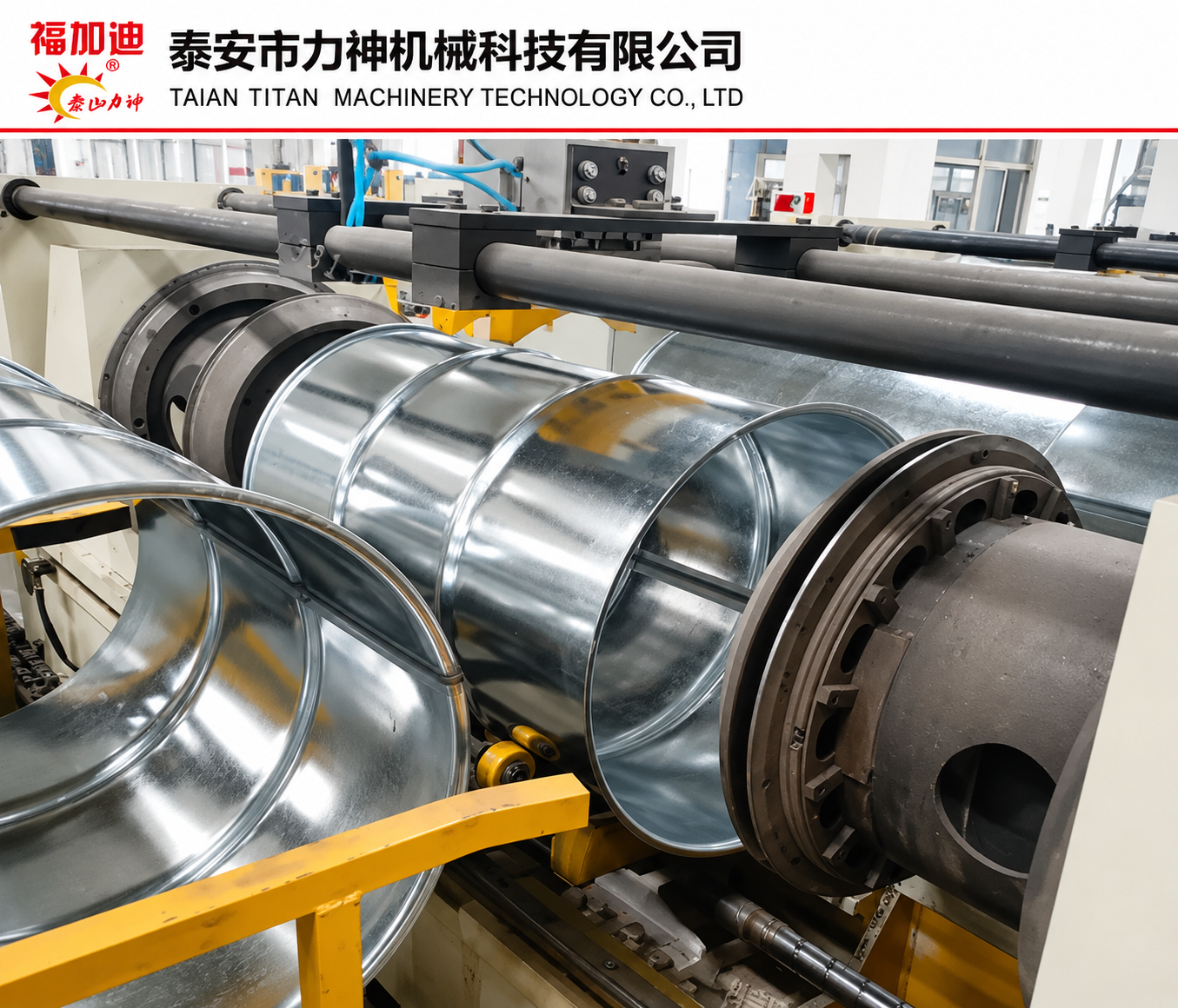
Turnkey capability. Some suppliers—and I'm proud to say we are one of them—can provide complete turnkey solutions: from uncoiling and leveling, mid-stage drum manufacturing to post-coating, everything is packaged together. You only need to deal with one supplier, no need to piece things together from elsewhere.
My principle: If a supplier is vague about your customized needs, walk away—they are most likely just middlemen.
H2: Three Real Factory Stories—Lessons Learned from Pain and Success Sharing three real-life cases, names omitted, but the lessons are real.
Case 1: Buying Too Far, Dragging Them Down
A chemical plant in Southeast Asia bought a high-speed oil drum production line, claiming to produce 8 drums per minute. At the time, their annual output was only 150,000 units. Three years later, the equipment was still operating at only half capacity. They paid in full for equipment they couldn't utilize and are now burdened with loans. Lesson: Buy equipment to match current needs, leaving room for growth over the next 2-3 years; don't pay for a blueprint five years from now.
Case Study 2: Customization Saved Them Their Lives
A food processing company needed stainless steel drum production equipment to produce edible oil packaging. Ordinary carbon steel lines simply wouldn't work—food safety regulations require all stainless steel. They found a supplier willing to customize the entire line, modifying everything from feeding and welding to the inner coating to food-grade standards. Today, they are the largest supplier of food-grade steel drums in the area. Lesson: Don't compromise on special requirements; find someone who can truly customize.
Case Study 3: Turnkey Solutions Save Newcomers
A medium-sized factory was venturing into steel drum production for the first time. They had the factory and capital, but no experience. They chose a turnkey solution—one supplier handled design, installation, and training. Production commenced smoothly four months after equipment delivery. Lesson learned: If you're a beginner, the premium for turnkey solutions is absolutely worthwhile.
H2: My Selection Checklist – 10 Must-Ask Questions for Suppliers
I have a mental list of "soul-searching questions." Every time I contact a potential supplier, I ask these:
How long is the delivery time? A complete production line typically takes around 130 days from prepayment to shipment. If someone claims it's faster, you need to ask why.
What does the quote include? Is it the machine itself, or does it include installation, training, and after-sales service?
Have you done any projects with the exact same barrel shape as mine? Show me similar cases.
How long is the warranty period? The industry standard is around 13 months from the bill of lading date.
Do you have local after-sales service? If the machine breaks down, how many days will it take for someone to come and repair it?
What are the water, electricity, and gas requirements? What utilities do I need to prepare in advance?
Can I visit a running site? Seeing is believing. Be wary if they are hesitant.
How is the training arranged? How many people will be trained? How long is the training?
How are spare parts supplied? Are commonly used spare parts locally stocked?
What is the total cost of ownership over five years? Besides the purchase price, how much will maintenance, energy consumption, and consumables cost?
H2: Common Questions about Steel Drum Production Equipment (FAQ)
Q1: What is the difference between open-top and closed-top drum production equipment?
Open-top drum production equipment (open type) produces drums with removable lids, suitable for solids, pastes, and other materials that require frequent handling. Closed-top drum production equipment (closed type) produces drums with fixed tops and inlets, standard for liquids and materials requiring sealed transport. Some production lines are compatible with both, offering greater flexibility.
Q2: How many years can a steel drum production line typically last?
With proper maintenance, steel drum production equipment can last 15-20 years or even longer. The key is to perform regular preventative maintenance and use qualified consumables. I've seen old lines from the early 2000s that are still running stably today because of their owner's careful maintenance.
Q3: Can one production line produce drums of different sizes?
Yes. Many drum production lines can cover a range of 100-220 liters. However, changing sizes requires mold change time and different tooling. If you frequently change sizes, be sure to choose a line with a "quick changeover" function.
Q4: What is the most important indicator when choosing steel drum production equipment?
Speed is important, but I think reliability is even more important. A machine that stably runs at 5 drums/minute is far better than one that claims 8 drums/minute but breaks down twice a month. Choosing a mature design and a reputable manufacturer is more reliable than simply looking at specifications.
Q5: How much factory space do I need?
A low-speed steel drum production line requires approximately 1000 square meters, a medium-speed approximately 2000 square meters, and a high-speed approximately 5000 square meters. This figure includes the production line itself as well as space for operation and material storage.
Conclusion: Choosing the right steel drum production equipment is not just about comparing specifications and prices. It's about understanding your true needs, matching the equipment to your requirements, and finding a partner willing to support you long-term. The steel drum market is growing—from $12.3 billion in 2023 to a projected $21 billion by 2033. This growth presents opportunities for manufacturers worldwide, but opportunities come with risks. Choosing the wrong equipment can delay you for years; choosing the right equipment can propel your business to new heights.
Don't rush, ask tough questions. If possible, visit factories in person. Remember: the cheapest offer is often not the best value.
I've been in this industry for decades, and I learn something new with every project. If you're looking for a steel drum production line, I hope this guide will help you make a smarter decision.
Questions? Feel free to contact me anytime; I'm happy to talk about drums.


This website uses cookies to ensure you get the best experience on our website.


 Español
 Pусский
 Français
 العربية



 Phone
Phone
Comment
(0)