

Contact Details:
+86 17852488518

Product Overview
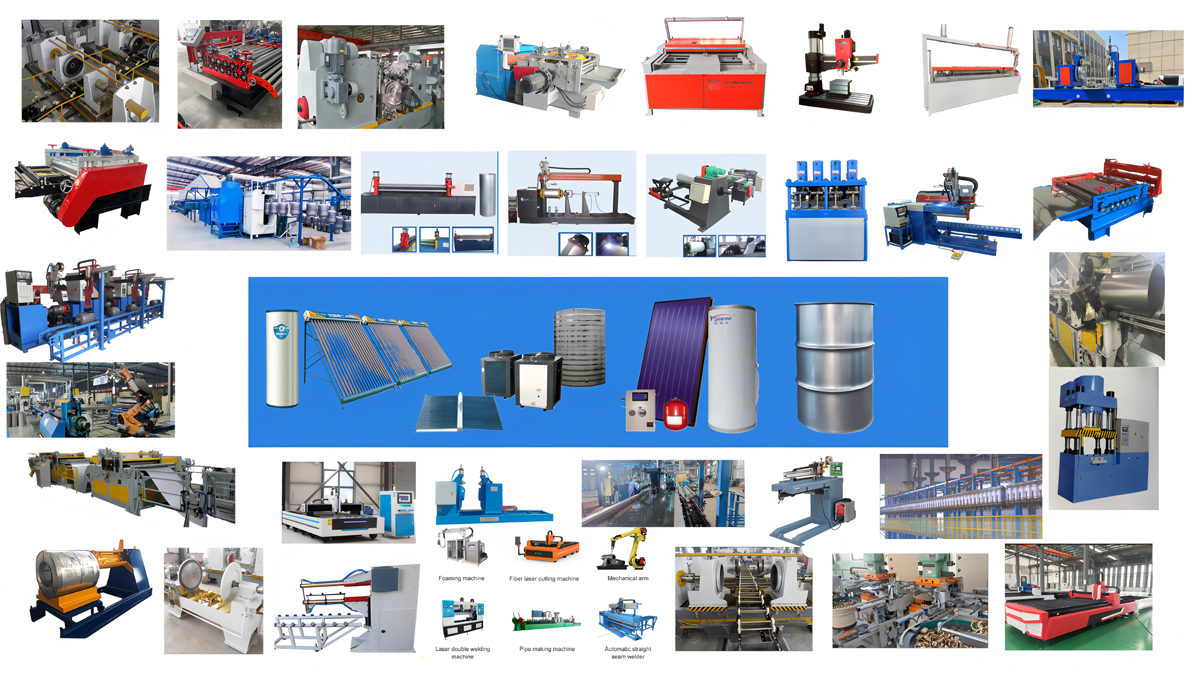
The drum forming machine is the core forming equipment in a Steel Drum Production Line. It is mainly used for shaping, sizing, and forming the drum body after steel plates have undergone shearing, rolling, and welding processes, ensuring that the steel drums meet the specified diameter, roundness, and height dimensions. The equipment can be customized according to different product specifications such as 200L steel drums, chemical drums, oil drums, and paint drums, and is suitable for steel plate materials of different thicknesses and widths. The entire machine adopts a high-strength frame, precision forming molds, and a stable mechanical or hydraulic drive system. It can also be equipped with PLC automatic control, automatic positioning, and conveying devices to achieve continuous production. The equipment features high forming accuracy, good drum roundness, stable operation, convenient operation, and high production efficiency. It can be used in conjunction with Plate rolling machines, longitudinal seam welding machines, flanging machines, rib-expanding seam rolling machines, and sealing machines, making it suitable for medium-to-high-speed automated steel drum production lines, effectively improving drum making efficiency and product consistency.


When I walk into a steel drum factory, the first thing I look for is the forming machine. Not the welder, not the seamer—the
forming machine. Because that's where the drum actually takes shape. If that machine is off, nothing else matters. The
welder can't fix a misshapen drum. The seamer can't seal a drum that isn't round. The paint can't hide a body that wobbles.
The forming machine is where the steel becomes a drum, and it deserves your full attention.
In steel drum production, "forming" is a broad term that covers several operations: curling (rolling the flat sheet into a
cylinder), flanging (creating the edge that the lid grips onto), beading (adding the reinforcing ribs), and sometimes necking
(reducing the diameter of the drum mouth). These are separate steps, but in a modern steel drum line, they're often
combined into a single continuous process. That's what a full steel drum forming system looks like.
The first step is the curling machine, sometimes called a Plate bending machine or rolling machine. This is a three-roller
machine that bends the flat steel sheet into a cylinder. The sheet is fed between two bottom rollers and a top roller, which
presses down to create the curvature. The roundness of your drum depends on the precision of this machine. A good
machine will hold roundness within ±0.5 millimeters. Anything more, and your welder will struggle to close the seam.
After curling, the drum body moves to the flanging station. Flanging is the operation that curls the edge of the drum body
outward, creating the flange that the lid will grip onto during seaming. A flanging machine uses rollers to curl the edge at a
consistent angle—usually around 90 degrees. If the flange angle is off by even a few degrees, the seam won't seal properly.
The key to consistent flanging is maintaining the roller profiles and adjusting the machine carefully when you switch drum
sizes.
The next forming operation is beading, which adds the reinforcing ribs that prevent the drum from crushing under stacking
loads. A beading machine uses rollers to press ridges into the drum body. In modern steel drum lines, beading and flanging
are often combined into a single machine. A combination machine saves floor space and reduces handling, but it's more
complex to set up and maintain. The main advantage of an integrated forming system is that you're not moving the drum
between separate machines. That means less handling, fewer scratches, and more consistent results.
If you're choosing a forming system, there are a few key specifications to evaluate. First, capacity. Your forming system
needs to handle the steel thicknesses and drum sizes you're running. For standard steel drums, you'll be working with steel
between 0.8mm and 1.5mm thick and drum diameters around 560-571.5mm. Second, speed. A modern forming system
should be able to process 8 to 12 drums per minute. If your line runs slower than that, you'll be the bottleneck. Third,
tooling changeover. If you're running multiple drum sizes, quick-change tooling is essential. Some combination machines
let you switch between drum sizes in under 10 minutes.
Here's a practical tip I've learned: keep a set of spare rollers for your flanging and beading heads. Rollers wear over time,
and when they do, the profiles change. That change shows up as inconsistent flanges and shallow beads. Having a spare set
lets you swap them out and keep production running while the worn ones are being reground. Another tip: invest in a good
lubrication system for your forming machines. The moving parts in a curling, flanging, and beading machine are under a lot
of stress. A reliable automatic lubrication system will extend the life of your machine and reduce downtime.
Your steel drum forming system is the foundation of your production line. It's where the steel becomes a drum. And if it's not
working right, nothing else works right. Choose a system that matches your production volume, your material thickness,
and your quality requirements. Maintain it carefully, and it'll give you years of consistent performance.


This website uses cookies to ensure you get the best experience on our website.


 Español
 Pусский
 Français
 العربية



 Phone
Phone