

Contact Details:
+86 17852488518

Automatic Barrel Rolling Welding Forming Machine | High-Efficiency & Energy-Saving
Our automatic barrel rolling welding forming machine is an all-in-one industrial solution designed for high-precision barrel and cylinder production, catering to the manufacturing needs of hazardous material packaging barrels, industrial storage barrels, and metal cylinder products. Engineered for full-process automation, stable welding performance, and cost-effective operation, this integrated machine integrates feeding, rolling, welding, roll forming, and unloading into a single streamlined workflow, solving the pain points of traditional barrel production such as fragmented processes, low efficiency, unstable welding quality, and high energy consumption. It has become a preferred production equipment for medium and large metal barrel manufacturing enterprises worldwide, fully complying with international export standards for hazardous material packaging.

Parameter Name | Specification Range |
Applicable Drum Type | 18L ~ 250L steel drums (200L/208L preferred) |
Drum Diameter | φ360 ~ φ600mm (standard φ560 / φ571.5mm) |
Drum Height | 300mm ~ 1100mm (standard 900 ~ 1025mm) |
Plate Thickness | 0.5mm ~ 1.5mm (carbon steel plate) / 0.3mm ~ 1.2mm (galvanized plate, stainless steel plate) |
Welding Overlap | 2.0 ~ 3.0mm (standard 2.5±0.5mm) |
Welding Speed | 5m/min ~ 16m/min |
Production Cycle | 360 ~ 800 pieces/hour (depending on specifications and configuration) |
Maximum Welding Power | 100KVA ~ 500KVA (standard 260KVA) |
Welding Power Supply | Three-phase 380V / 50Hz, medium-frequency inverter/three-phase secondary rectifier |
Compressed air pressure | 0.6MPa |
Cooling water flow rate | ≥20 L/min, pressure: ≥0.4MPa, inlet temperature: ≤20℃ |
Dimensions (approx.) | 4000mm (L) × 1600mm (W) × 2800mm (H) |
Different from traditional barrel production equipment that requires multiple standalone machines and manual docking procedures, our automatic barrel forming machine adopts a highly integrated seven-overlapping-step design, realizing one-stop automatic operation from automatic feeding, rolling, precision welding, secondary roll forming to intelligent unloading. The optimized overlapping process structure eliminates redundant intermediate links and completely removes the need for pre-welding grinding and post-welding trimming processes that are essential in conventional production lines.
This integrated process design not only simplifies the entire production workflow and reduces manual intervention and operation errors but also significantly shortens the single-product production cycle. It effectively improves overall production efficiency while cutting down labor costs and secondary processing material losses. Whether for mass continuous production or batch customized production of metal barrels, the machine can maintain stable and high-output operation, bringing higher production capacity and economic benefits for manufacturing factories.
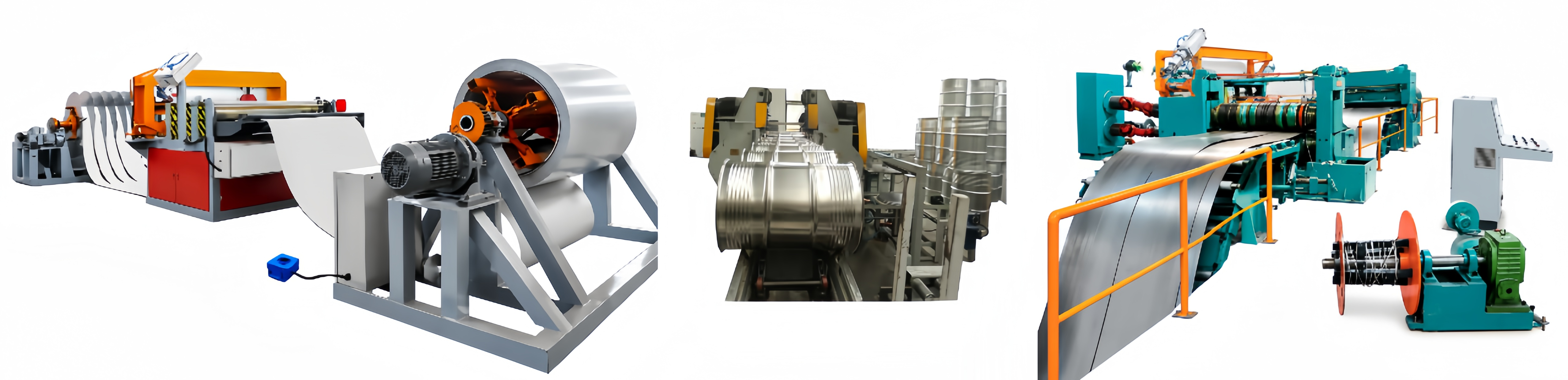
Welding quality is the core standard that determines the safety and qualification of metal packaging barrels, especially for barrels used for hazardous material transportation and storage. This machine is equipped with professional precision welding and rolling systems, controlling the welding overlap within an ultra-tight tolerance range of 2.5±0.5mm. The precise overlap positioning ensures uniform welding pressure and seamless fusion during the welding process, delivering smooth, flat, and spatter-free welds with no cracks or gaps.
After two professional roll forming treatments, the whole barrel body features a round and smooth appearance with uniform overall stress and no deformation. Most importantly, the optimized welding and forming process greatly enhances the airtightness and pressure resistance of the barrel body. All finished products fully meet strict export hazardous material packaging regulations, passing international standard airtightness and pressure resistance tests effortlessly. The reliable and consistent welding quality avoids product scrapping caused by defective welding, effectively improving product qualification rates and brand product competitiveness in the global market.
Focusing on intelligent manufacturing and green production, this automatic barrel welding and forming machine adopts a mature PLC + touch screen intelligent control system. All production parameters including rolling speed, welding current, forming pressure, and feeding volume are adjustable and customizable through the touch screen panel. The visual operation interface is simple and intuitive, with automatic parameter memory and fault alarm functions, which reduces the threshold for operator operation, realizes standardized and standardized production, and ensures consistent product quality in every batch.
In terms of energy saving and cost reduction, the machine is equipped with an advanced medium-frequency inverter power supply module, which optimizes the power output mode compared with traditional ordinary welding machines. It can save more than 50% of electric energy during long-term continuous operation, greatly reducing factory power consumption costs. In addition, the ultra-small 2.5mm standard welding overlap design minimizes the overlapping area of steel plates in the production process, effectively saving raw steel plate materials and lowering the unit material cost of each finished barrel. The dual advantages of energy saving and material saving make the equipment have a higher cost-performance ratio and lower long-term operation cost.
This all-in-one barrel rolling welding forming machine is widely applicable to the mass production of various metal barrels, including chemical hazardous material barrels, fuel storage barrels, industrial packaging cylinders, and other metal pressure vessel products. It is suitable for small, medium, and large manufacturing factories, supporting customized production of barrels of different specifications. With its automated operation, stable quality, energy-saving and efficient features, it perfectly adapts to the high-standard production requirements of the modern metal packaging industry, helping enterprises upgrade their production lines and meet international export trade standards.
Our professional foreign trade team boasts rich experience and in-depth knowledge of international business. We deliver efficient communication, on-time delivery and comprehensive after-sales support throughout the whole process. Dedicated to every detail, we strive to provide you with fully satisfactory services.

The Steel Drum Seam Welding Machine: Resistance Welding Technology and Production Line Integration
The steel drum manufacturing industry produces approximately 400-500 million new drums annually worldwide, serving the chemical, petroleum, food, and pharmaceutical sectors. Within the Steel Drum Production Line, the seam welding machine performs the critical operation of joining the longitudinal seam of the drum body after the flat steel sheet has been rolled into a cylindrical shape .
Prior to the development of automated seam welding, drum manufacturers used a two-step process: spot welding to temporarily fix the seam at four points, followed by transfer to a separate straight seam welding machine for final welding. This method required two to three workers per line and involved repeated material handling between stations . The introduction of integrated seam welding machines eliminated the intermediate spot welding step, allowing the rolled sheet to proceed directly to seam welding on the same platform .
Market demand for seam welding equipment tracks with drum production volumes. Major manufacturers across Europe, North America, and Asia maintain continuous demand for both new machines and replacement components. The Asia-Pacific region, particularly China, has developed substantial manufacturing capability for drum-making equipment, with documented installations across multiple provinces and export to markets worldwide .
The steel drum seam welding machine operates on the resistance welding principle. Two copper alloy welding wheels (electrodes) apply pressure to the overlapped seam of the rolled steel cylinder while a high electrical current passes through the workpieces. The resistance at the interface between the overlapping steel sheets generates heat sufficient to melt the metal locally. As the welding wheels rotate and the drum moves between them, a series of overlapping weld nuggets forms a continuous, gas-tight seam .
This process differs fundamentally from arc welding methods. In resistance seam welding, the workpieces themselves generate the welding heat through their own electrical resistance, eliminating the need for filler material or shielding gas. The welding wheels serve both as electrical contacts and as mechanical pressure applicators, consolidating the molten metal into a solid joint.
Two welding current technologies dominate the market. Traditional AC welding uses a standard line frequency (50/60 Hz) power supply with thyristor control. Intermediate frequency (MF) welding converts the input power to a higher frequency (typically 1000-4000 Hz), providing more precise control over the heating cycle and producing a weld seam with reinforced horizontal lines spaced at less than 1 mm intervals . MF welding is increasingly specified for high-speed production lines due to its superior weld consistency.
Machine architecture varies by automation level. Semi-automatic machines require manual loading of the rolled drum body and produce approximately 2 drums per minute . Fully automatic machines integrate material handling, rolling, welding, and unloading into a single continuous process, achieving production rates of 5-12 drums per minute depending on the model .
Frame construction uses heavy steel plate welded sections designed to maintain alignment under the high electrode pressures required for resistance welding (up to 6000 N or approximately 600 kg-force) . The frame must resist deflection during welding cycles to ensure consistent pressure distribution across the seam length.
Welding wheels (electrodes) are manufactured from beryllium copper or chromium copper alloys. These materials combine high electrical conductivity with good mechanical strength and resistance to deformation under heat and pressure. The wheel width exceeds the overlap width of the steel sheets to ensure complete coverage of the joint. Wheel diameter and profile affect heat distribution along the seam and require periodic re-profiling as the working surface wears.
Drive systems on modern machines use servo motors and programmable logic controllers (PLC) for synchronized motion. The welding speed ranges from 5 to 16 meters per minute depending on steel thickness and material properties . Variable frequency drives allow operators to adjust speed to match specific steel grades and coating types.
Cooling systems are essential for continuous operation. The welding wheels and electrical conductors generate substantial heat during production. Water cooling circuits circulate 80-1300 liters per hour through the electrodes and transformer, maintaining stable temperatures and preventing overheating that would degrade weld quality .

Overlap width consistency directly affects weld strength. The two edges of the rolled steel sheet must overlap by 2.5 to 6 mm along the full length of the drum. Variations in overlap width produce uneven weld nugget formation: excessive overlap creates cold welds, while insufficient overlap results in incomplete fusion and leak paths .
Steel thickness and material properties determine welding parameter requirements. Common drum steel thicknesses range from 0.6 mm for light-duty drums to 1.5 mm for heavy industrial containers . The machine must accommodate this range through adjustable electrode pressure, welding current, and speed settings. Galvanized and pre-coated steels require modified parameters to avoid coating damage during welding .
Electrode pressure consistency across the seam length ensures uniform nugget formation. Pressure variations cause intermittent weld defects that may not be visible externally but fail leak testing. Modern machines use pneumatic or hydraulic pressure systems with closed-loop monitoring.
Current waveform control distinguishes high-quality welding from marginal production. Intermediate frequency welding provides the most precise control, allowing separate adjustment of upslope, weld time, and downslope parameters. This capability is particularly valuable when welding coated or high-strength steels.
Material feed alignment between the rolling station and welding head prevents seam tracking errors. Misalignment as small as 0.5 mm can cause the welding wheels to run off the overlap, producing an incomplete seam that requires costly rework or drum rejection.
Inconsistent weld penetration manifests as weak spots along the seam that may pass visual inspection but fail hydrostatic testing. Field service records indicate that welding speed variation—often caused by uneven drive system performance—accounts for approximately 60% of penetration inconsistency complaints.
Copper wheel contamination occurs when zinc from galvanized steel or residue from mill oils transfers to the electrode surface. Contamination increases electrical resistance at the wheel-workpiece interface, causing arcing and surface pitting. Regular wheel cleaning or dressing intervals of 5000-10000 drums are typically required .
Edge misalignment after rolling represents a pre-weld quality issue. If the rounding process does not produce a true cylinder with properly aligned edges, the seam welding machine cannot correct the geometry. Some modern machines integrate the rolling and welding functions on a single platform, reducing this risk by eliminating transfer between stations .
Splash and expulsion occurs when the welding current is too high or the electrode pressure insufficient. Molten metal ejected from the weld zone creates surface defects and reduces joint strength. Operators typically respond by reducing current or increasing pressure, but finding the optimal balance requires experience with each steel lot.
Cooling system failure quickly leads to electrode overheating and weld quality degradation. Water flow interruptions of even 30 seconds can raise electrode temperatures above the point where consistent weld nuggets form. Production lines without flow monitoring devices risk producing entire batches of marginal drums before the problem is detected.
The seam welding machine market includes three tiers of suppliers. Global equipment manufacturers with documented installations at major drum producers (Greif, Mauser, Schutz) represent the highest reliability tier. Regional manufacturers in China, India, and Turkey offer lower-cost alternatives suitable for small to medium-scale production . Specialty rebuilders remanufacture existing machines with updated controls.
Supplier evaluation criteria should include:
Production speed validation through customer references at claimed output rates. A supplier claiming 12 drums per minute should provide installation examples achieving this sustained rate across multiple shifts.
Weld quality documentation including cross-section micrographs of welded seams, leak test results, and pull test data. ISO-certified suppliers can provide these records for each machine delivered .
Spare parts availability with documented lead times for welding wheels (typical service life 50,000-100,000 drums), bearings, seals, and electrical components. Suppliers with local stocking arrangements reduce downtime risk.
Installation and training scope should include on-site commissioning, operator training on parameter adjustment for different steel grades, and documented preventive maintenance procedures.
Chemical drum production represents the largest application segment. A Fully automatic seam welding machine integrated with decoiling, leveling, cutting, rolling, and flanging stations produces finished drum bodies at 8-10 units per minute. The welded seam meets UN certification requirements for hazardous materials transport .
Food-grade stainless steel drums require seam welding machines with stainless steel-compatible welding wheels and food-grade lubricants. The welding parameters must produce smooth seams without crevices that could harbor bacteria. Intermediate frequency welding machines are preferred for this application due to their precise heat control .
Reconditioning operations create secondary demand for seam welding equipment. Returned drums are crushed, re-rounded, and passed through seam welders to repair damaged seams before repainting. This application requires machines capable of handling drums with varying degrees of prior deformation.
Integrated rolling and welding eliminates the transfer step between rounding and welding operations. Machines now available complete both processes on the same platform, automatically feeding the cut sheet through rolling rolls that form the cylinder and deliver it directly to the welding head with proper edge alignment .
Intermediate frequency adoption continues to expand. MF welding produces seams with reinforced horizontal lines at less than 1 mm spacing, improving strength compared to conventional AC welding. The technology also reduces energy consumption and extends electrode life .
Digital monitoring and predictive maintenance are entering the seam welder market. Vibration sensors on welding wheel bearings, current and voltage monitoring on each weld pulse, and vision systems for seam inspection provide real-time quality data. One equipment manufacturer reports that predictive models can forecast welding wheel replacement needs within ±500 drum accuracy.
Thinner steel capability driven by material cost pressures pushes machines to handle 0.4-0.6 mm steel for light-duty drums. This requires redesigned welding wheels with larger diameters to distribute heat and pressure without tearing thin material.
The steel drum seam welding machine, while mature in its basic resistance welding principle, continues to evolve through improved power supply technology, automation integration, and predictive maintenance capabilities. For production managers, the selection between AC and MF welding—and between integrated and separate rolling-welding stations—remains the key technical decision affecting production efficiency and weld quality consistency.
 RELATED
 RELATED
 RELATED
 RELATED


This website uses cookies to ensure you get the best experience on our website.


 Español
 Pусский
 Français
 العربية



 Phone
Phone