Hydraulic Three Roller Bending Machine
A Hydraulic Three Roller Bending Machine is a highly efficient and widely used piece of metal forming equipment designed for bending sheet metal, plates, and cylindrical workpieces into round or curved shapes. It is commonly applied in industries such as shipbuilding, construction, pressure vessel manufacturing, wind tower production, aerospace, and general metal fabrication. With its stable performance, strong bending force, and precise control, this machine is an ideal solution for producing high-quality curved components.The structure of a hydraulic three roller bending machine usually consists of three main rollers arranged in a triangular layout. The upper roller is generally driven by hydraulic power, while the two lower rollers work together to support and guide the material. During operation, the metal plate is fed between the rollers, and the hydraulic system adjusts the position of the rollers to create the required bending radius. By controlling the pressure and movement of the rollers, operators can achieve accurate and consistent bending results.One of the main advantages of this machine is its hydraulic drive system. Compared with mechanical bending equipment, hydraulic transmission provides stronger force, smoother operation, and better stability. It allows the machine to handle thick and heavy plates with ease, making it suitable for demanding industrial applications. The hydraulic system also improves precision, as the roller positions can be adjusted more accurately according to the thickness and width of the material.Another important feature is its excellent forming capability. The three-roller design enables the machine to bend metal sheets into various shapes, including cylinders, cones, and arcs. It can also perform pre-bending on the edges of the plate, reducing flat ends and improving the quality of the finished workpiece. This makes the machine especially valuable for tasks that require high roundness and minimal deformation.In addition, the hydraulic three roller bending machine is known for its ease of operation. Modern models are often equipped with digital displays, programmable controls, and safety devices that help operators work more efficiently and safely. The machine can be adjusted for different materials, sizes, and thicknesses, which increases flexibility and productivity in the workshop.Durability is another strong point of this equipment. The main frame is usually built from heavy-duty steel to ensure rigidity and long service life. High-quality rollers and hydraulic components are designed to withstand continuous use under heavy loads. Regular maintenance, such as checking hydraulic oil, lubricating moving parts, and inspecting roller alignment, can further extend the machine’s service life and maintain consistent performance.Overall, the Hydraulic Three Roller Bending Machine is an essential tool for modern metal processing. It combines power, precision, and reliability in one machine, helping manufacturers produce curved metal parts efficiently and accurately. Whether used for small workshops or large industrial production lines, this machine delivers excellent bending quality and strong adaptability to a wide range of fabrication needs.
Products
Category:
-
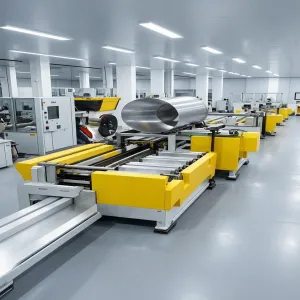
Heavy Duty Steel Plate Rolling Machine
Category:
Steel drum production line
Browse number:
165
Number:
Release time:
2026-07-21 14:09:25
A plate rolling machine is specialized equipment designed to bend flat metal stock into arcs or cylinders through a rolling process; it is widely used in industries such as pipeline manufacturing, pressure vessel fabrication, steel structure construction, shipbuilding, and wind turbine production. Its operation relies on continuous three-point rolling technology: metal plate is fed between rollers arranged at specific angles. By adjusting the relative positions and rotation of the rollers, continuous, progressive pressure is applied to the plate, inducing plastic deformation to form the desired arc or cylindrical workpiece.
Based on the number and arrangement of rollers, these machines are primarily categorized into three types: symmetrical three-roll, asymmetrical three-roll, and four-roll. The symmetrical three-roll configuration is the most common, featuring a symmetrical layout where the two bottom rollers act as drive rollers to advance the material, while the top roller moves vertically to apply forming pressure; however, this type leaves unrolled flat sections—known as "residual straight edges"—at both ends of the plate. Asymmetrical three-roll machines utilize a side-roll design to pre-bend one end of the plate, significantly reducing the residual straight edge. Four-roll machines are capable of pre-bending both ends of the plate, thereby completely eliminating residual straight edges and allowing the rolling process to be completed in a single setup, though they feature a more complex structure and higher costs.
News
Category:
No search results found!
Case
Category:
No search results found!
Video
Category:
No search results found!
Download
Category:
No search results found!
Job
Category:
No search results found!
Featured Products





 Español
 Pусский
 Français
 العربية



 Phone
Phone