Tin Can Manufacturing Equipment
Tin can manufacturing equipment refers to the specialized machinery used to produce metal cans for food, beverages, aerosol products, and other packaged goods. This equipment is designed to handle the full production process, from shaping and cutting metal sheets to forming, sealing, and inspecting finished cans. It plays a crucial role in modern packaging because it helps manufacturers achieve high production speed, consistent product quality, and reliable sealing performance.The production of tin cans usually begins with metal coil feeding systems. These systems supply sheets of tinplate, tin-free steel, or aluminum into the line. The material is then cut into precise shapes by a blanking or cutting machine. In many production lines, the cut sheets are formed into cylindrical bodies through a body-making machine. This machine rolls the metal into a round shape and welds or seames the edges together, creating a strong and durable can body.After the body is formed, the next step is often flanging, necking, or beading, depending on the can design. Flanging equipment prepares the edges for lid attachment, while necking machines reduce the diameter of the can opening to improve material efficiency and compatibility with closures. Beading machines add rings or grooves that increase the strength of the container and help it withstand pressure during filling and transportation.For three-piece cans, the body is usually sealed by side seam welding or soldering. For two-piece cans, drawing and ironing equipment is used to form the can body from a single piece of metal. In beverage can production, high-speed draw and wall-ironing machines are especially important because they create lightweight containers with excellent structural integrity. These systems must operate with precision to maintain uniform wall thickness and smooth surfaces.Lid and end-making machines are another important part of the production line. They form tops and bottoms with easy-open features, score lines, and sealing compounds. These components are essential for ensuring that the can remains airtight and safe for storage. Seaming machines then attach the lids to the can body with a tight double seam, which is critical for preserving freshness and preventing leakage.Modern tin can manufacturing equipment also includes cleaning, coating, drying, and printing systems. Cleaning machines remove oil and dust from metal surfaces, while coating units apply protective internal and external layers. Printing machines add branding, product information, and decorative designs. These steps improve both product appearance and corrosion resistance.Quality control equipment is also widely used in the production process. Vision inspection systems, leak testers, dimensional measuring devices, and seam analyzers help detect defects and ensure that every can meets strict standards. Automation and digital monitoring have made the equipment more efficient, reducing labor costs and increasing output consistency.Overall, tin can manufacturing equipment is essential for producing safe, durable, and attractive metal packaging. Its advanced mechanical and automated functions support large-scale production while meeting the demanding requirements of food, beverage, and industrial packaging markets.
Products
Category:
-
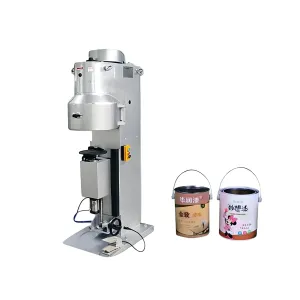
Tin Can Manufacturing Equipment
Category:
Steel drum production line
Browse number:
171
Number:
Release time:
2026-06-23 16:43:29
1. Hydraulic + PLC Control, Simple Operation: Hydraulic drive for expansion block extension and retraction, resulting in low impact and stable operation; Siemens PLC touchscreen allows for setting rib positions, quantity, and depth with one-button switching.
2. Compatible with Multiple Specifications: Applicable to barrel diameters of φ350~600mm, barrel heights of 250~1000mm, and thicknesses of 0.5~1.5mm, handling 18L~250L barrels in one machine; supports single-sided/double-sided rib expansion.
3. Excellent Forming Quality: Rigid segmented punch static extrusion produces full ring rib contours, adjustable height of 15~25mm, good barrel roundness, and significantly improved strength.
4. Compact and Durable, Easy Maintenance: The entire machine weighs approximately
5 tons, occupying a small area; the expansion blocks are heat-treated for wear resistance, and the guide rails have centralized lubrication, requiring minimal daily maintenance.
News
Category:
No search results found!
Case
Category:
No search results found!
Video
Category:
No search results found!
Download
Category:
No search results found!
Job
Category:
No search results found!
Featured Products
No search results found!





 Español
 Pусский
 Français
 العربية



 Phone
Phone